Showing posts with label George Polley. Show all posts

Thursday, August 25, 2011

Unforgettable stories by one of India's greatest writers


Rabindranath Tagore, Selected Short Stories. Trans. Mohammad A. Quayum. New Delhi: Macmillan, 2011. liii+160 pp. ISBN 023- 033-277-3.

Whereas the names of many Nobel laureates in Literature have been forgotten, Rabindranath Tagore, Asia’s first Nobel laureate (1913), remains an important and compelling figure in world literature. Professor Quayum’s book, with its collection of nineteen of Tagore’s short stories, is a welcome addition to his oeuvre and his legacy.

Primarily known for his poetry, Tagore “was also an actor, playwright, producer, musician, painter, educationist, cultural reformer, philosopher, novelist, short story writer, and a critic of life, politics, art and literature” (xv). A polymath, Tagore had this to say about himself: “To tell you the truth, I do not quite know what my real vocation is or should be. I am very much in the position of a young woman who, in the pride of her youth, is unwilling to part with any of her suitors” (xv). I smile whenever I read that, because my graduate advisor at the University of Illinois told me I was “too eclectic.” To me, having broad interests is just the way I am. It’s no wonder that Tagore had such great appeal to me when I first read him as a college sophomore back in 1954.

Tagore’s views on social justice, spirituality, respect for women, children and all people are both compelling and relevant to the global village reality of the twenty first century. Sadly, when I began my professional studies in 1960 and became preoccupied with developing my professional career, I forgot about him until asked to review this book. Reading these nineteen stories, reminds me just how much Tagore’s ideas influenced my thinking, and how deeply indebted I am to him. “In each of these stories,” Professor Quayum writes, “Tagore’s concerns are essentially moral and ethical.... He believed in the equality and fellowship of all human beings. He urged his readers to shun Kuvera, the god of money and the genius of property that knows no moral responsibility...” (xxxix). “[I]n his short stories he recurrently pleaded for social justice, protection of the helpless, education of the illiterate, material well-being for the indigent, and an unfettered dignity for woman and children” (xl). “Over and again, he returns to the same social, psychological, cultural, economic and political issues, despite their period of composition” (xliv). His stories show “how our fundamental values, attitudes and emotions either unite us or separate us” (xliv). Rabindranath Tagore is as relevant – and as accessible – as he was when his work was first published.

In each of the stories, written between 1891 and 1941 and translated into very readable English by Professor Quayum, English speaking readers will identify with the characters in the stories. For example, in “The Postmaster,” an urban-bred young man is sent to a rural village where he is totally ignorant about village life and has no idea how to relate to the villagers. This put me in mind of an experience in my own life when, in the summer of 1963, I moved from San Francisco, California to a job in a central Illinois village of 150 people. The young postmaster’s discomfort was my discomfort, his experience in a small Bengali village my experience in that tiny village in central Illinois. The myriad ways in which differences in race, background and class distance people from each other are glaringly obvious in the story. In the end, the young Postmaster puts in for a transfer back to the city, leaving behind Ratan, a destitute orphan girl who bakes his bread, fixes him meals and cares for him when he is ill. At the end of a year I moved on to graduate school, where I was much more comfortable with the culture.

To Tagore, connection and connectivity are fundamental realities in all life, especially in human relationships. Each of the stories in this collection illustrates what is a major preoccupation in his life and his writing – the interplay between connection and brokenness, justice and injustice, and the way fear and suspicion destroy harmony and peace. Disconnections are obvious in cruelty, discrimination, hatred and neglect, and in those instances where connection is so obvious in loving and tender relationships. As drawn by Tagore, the difference between connection and disconnection between people is so painfully obvious in these stories that it brought tears to my eyes.

Fear and suspicion lurks in almost every human relationship, which Tagore illustrates so well in each of the following stories. There is the brutal beating of an Untouchable who accidentally brushes against someone of a higher caste (“Purification”); a husband’s cowardice in allowing his wife to prevent him from helping the Untouchable (“Purification”); the deep yearning in an Afghan street merchant’s heart for his daughter, far away in Afghanistan (“Kabuliwala”); the frustrated rage of a father at an Inspector who refuses to let a penniless man cremate his daughter (“Imprudence”); and a wife who, “[a]fter living for so many years in this world (though not many), ... has still not been able to temper her fear that the world is full of all kinds of horrors: thieves, robbers, drunkards, snakes, tigers, malaria, cockroaches and European soldiers” (“Kabuliwala”). The juxtaposition of cockroaches and European soldiers makes me laugh each time I read the sentence, because it is so true. I’ve known people with that level of fear and had that kind of unreasonable fear myself in situations where I felt uncomfortable and out of place. It is the kind of pathological fear that gossip feeds on and cynical politicians use to shape and control public discourse and opinion, and it can be deadly. Tagore is a master at depicting its corrosiveness. And last, but not at all least, there is the story of a young woman who, because a respected Muslim saves her from a band of robbers after her new husband flees the scene, converts from Hinduism to Islam, marries a son of her protector and saves her younger sister from the same band of robbers on her wedding day. Written at the end of his life and not published until 1955, “A Woman’s Conversion to Islam” is a story of compassion and courage that will not go down well with many people, yet it expresses so well Tagore’s deeply held beliefs about the unity of all mankind.

Professor Quayum’s translation of the stories in the book is clear, contemporary and accessible to twenty-first century readers. I hope this book will be made as widely available as possible so readers throughout the English speaking world will be able to order and read it. It is one I will recommend to all my English speaking friends here in Sapporo. It will certainly help to renew interest in the remarkable talents and insights of Rabindranath Tagore.

(This review was first published in the literary journal Asiatic, Vol 5, No. 1, June 2011.)


Sunday, January 2, 2011

Efraim Karsh, Palestine Betrayed


Efraim Karsh: Palestine Betrayed, Yale University Press, 2010.

Howard Sachar, author of A History of Israel, calls it “A work of meticulous, even exhaustive scholarship which must be taken with great seriousness and respect by historians of diverse points of view. Indeed, any student of modern Israel will ignore at their peril its sheer cornucopia of factual revelations” (from the dust jacket) … and the sheer abundance of its factual exclusions.

The following two quotations, one from the first page, the other from the last page of the text (257) establish the parameters of Professor Karsh’s study. “For Jews all over the world, this was the fulfillment of a millenarian yearning for national rebirth in their ancestral homeland. For Arab political elites, it was a shameful surrender of (a however minute) part of the perceived pan-Arab patrimony to a foreign invader.” 

“And so it goes on. More than six decades after the Mufti and his followers condemned their people to statelessness by rejecting the UN partition resolution and waging a war of annihilation against their Jewish neighbors, their reckless decisions are still being re-enacted by the latest generation of Palestinian leaders… Only when Palestinian and Arab leaders change these dispositions and eschew their genocidal hopes will the refugees and their descendants be able to leave the squalid camps where they have been kept by their fellow Arabs for decades, and will the Palestinians be able to look forward to putting their self-inflicted ‘catastrophe’ behind them.”

To Professor Karsh there is no need to present the Palestinian point of view, because to him the Palestinian point of view is not valid. Yet there is no evidence from his research that he ever tried to assess it, and he excoriates those historians (like Ilan PapĂ©, Shlomo Sand and others) who have. “It is indeed a historical irony that, since the late 1980’s, much of the Palestinian historiography has been written by Israeli ‘new historians’ … younger, politically engaged academics and journalists who claim to have discovered archival evidence substantiating the anti-Israeli case. These politicized historians have turned the saga of Israel’s birth upside down, with aggressors transformed into hapless victims and vice versa” (page 4). He goes on to claim that these “new historians”, instead of unearthing “new facts or offer[ing] new novel interpretations”, they have “recycled the standard Palestinian Arab narrative of the conflict” (page 5). His evidence? A Survey of Palestine. Prepared in December 1945 and January 1946 for the Information of the Anglo-American Committee of Enquiry (repr. 199) in full with permission from Her Majesty’s Stationery Office by the Institute for Palestine Studies, Washington, D.C), Vol. 2, pp 570-80; the Peel Commission Report, p. 91; and Aharon Cohen: Israel and the Arab World (London: W. H. Allen, 1970), p. 228. No mention of the sources they have used, no questioning of same, just dismissal of them as “politicized historians” who, being “politicized” are biased whereas he, somehow, is not.

From the simple exercise of reading the modern history of this region, the following things have occurred to me, but not to Professor Karsh:  that large numbers of new, mostly European immigrants would have seemed invasive to Palestine’s indigenous population … that the Balfour Declaration of 1917 and the UN’s declaration in 1947 to create a Jewish State in Mandated Palestine would have caused alarm bells to go off in the Middle East … that it is normal to expect that Palestine’s Arabs and their supporters would have fought against what they viewed as another in a long line of European colonialist adventures … that the continued expansion of illegal Jewish settlements in the Occupied Territories and Arab East Jerusalem is a problem … and that Israel’s Arab citizens are treated as second class citizens. All of these things are extensively documented, but not by Professor Karsh. Does this represent “meticulous, even exhaustive scholarship”? I don’t think so.

Is the book worth reading? Oh, definitely. His disrespect for Palestine’s Arabs is as crystal clear as his pro-Israeli bias. It is so clear that it is propaganda: stern, dismissive of other points of view, and very much interested in convincing its readers that what it presents is the truth, the whole truth, and nothing but the truth. But it isn't. Even the title, Palestine Betrayed gets it wrong.

To have peace in the Middle East or anywhere else, one must quit propagandizing and engage in peacemaking. Propaganda perpetuates conflict and suffering because, being dismissive, it refuses to listen to points of view other than its own. And that is as sad as it is troubling.

Professor Karsh has an undergraduate degree in Arabic and Modern Middle East History from Hebrew University (Jerusalem), and an MA and PhD in International Relations from Tel Aviv University (Tel Aviv). He is currently Professor and Head of the Middle East and Mediterranean Studies Programme, King’s College, London.

Thursday, December 30, 2010

See everyone in two to three weeks. Happy New Year

I'll be back with some exciting new reviews once I get my computer problems solved. I'll probably be offline for the next two to three weeks until I either get my computer fixed, or get a new computer.

Happy New Year from snowy Sapporo, Japan,

George Polley

Tuesday, October 5, 2010

A wonderful book, recommended to all who love to read

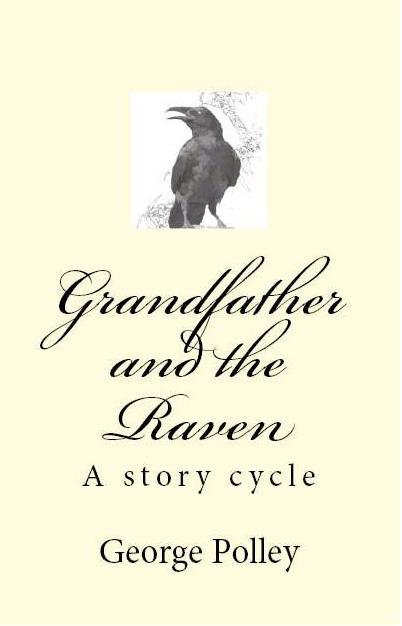
Here's a review, by blogger Suzannah (Soooz) Burke, that I just couldn't pass up. Not only is it by one of my favorite book bloggers, it's about one of my favorite books, Grandfather and the Raven.  I wrote it a year ago, and this summer it came out in paperback and kindle from Night Publishing (UK).

Grandfather and the Raven is a book of life cycles and lessons, beautifully narrated by George Polley.

This is the type of book I would love to have had access to when my own child was growing up, a book to be read and re-read and remembered with soft smiles and nods of understanding.

George takes us into the world of a Japanese grandfather, befriended unexpectedly by a raven. A wise and knowing bird, he soon becomes inseparable with his human friend, and his human friend 'The Grandfather' of the title understands his new friend and everything he says. He names him 'Sir Raven'.

The author takes us through life lessons told in a warm and inviting style. The voice of the grandfather is both soothing and touched with humor.

We travel through a kaleidoscope of clever stories with life lessons on revenge and selfishness, harmful gossip, and refusal to see the magic of the world around us.

We join Grandfather and Sir Raven as they utilize the assistance of other members of Sir Raven's family, notably "Flyer" who becomes the running coach of one small boy who wanted to be famous as a runner yet knew no boundaries and little of the pacing and practise it takes to fulfill a dream.

George takes us gently through the things children fear, and shows how fear can be overcome with knowledge and ingenuity.

The stories touch on difficult topics in a clear way, teaching that violence is an unacceptable thing, and that it will not go unpunished.

Selfish and spiteful behavior is shown to be clearly wrong, by showing that the opposite is truly more rewarding.

One particular chapter deals with our inability to see what is right in front of our eyes and how easy it is to fall into the trap of seeing something as bad, before we have the information to prove that it is not.

The sadness of death and the futility of war is covered with an insightful and precised voice. A message that should have been heard many years ago, and sadly went unheard. 

I am delighted to own a copy of this work, and unhesitatingly recommend it to anyone young and not so young. It is a wonderful read.

Soooz Burke

You'll find Suzannah Burke's blog, "Soooz Says Stuff"at http://sooozsaysstuff.blogspot.com/ , where you'll find some great interviews with writers as well as some really interesting book reviews.