Welcome to Tostada Speaks Blog. I'm an avid reader and author, with a wide range of interests. Guest bloggers, most from fellow Taylor Street Publishing authors, will be here from time to time as well. Stop by, look around, read what we have, and by all means, leave your comments for us. My author's website is www.geogepolleyauthor.com, which also has its own blog.
Sunday, May 20, 2012
An unforgettable page-turner of a crime novel
Saturday, April 30, 2011
Cultures of War -- How Militarism and Groupthink Lead to Catastrophe
Cultures of War is one of those books that, according to reviewers on amazon.com, people will either love or hate. Out of fourteen reviews, seven give it a five-star rating, six give it a one star, and one give it a three. Right off the bat, I'll tell you what my rating is: it is a very strong 5. Generally speaking, if you're a person who regards criticism of the U.S. and its policies as treason, you will hate this book. (One amazon.com reviewer calls it "a hate-filled rant from an ultra left loon.") But if you're looking for one of the best analyses around on how militarism with its culture of war dumb-down analysis and result in "strategic imbecilities", as John Dower so eloquently puts it, then you will love this book. A winner of the Pulitzer Prize for his book Embracing Defeat: Japan in the Wake of World War II and the National Book Critics Circle Award for his War Without Mercy: Race and Power in the Pacific War, and author of Japan in War & Peace, historian John W. Dower challenges conventional thinking about Pearl Harbor, Hiroshima, 9/11/2001 and our war in Iraq. It was conventional thinking that got Japan in trouble prior to and during World War II, and it was conventional thinking that got the U.S. in trouble following the terrorist attack on 9/11/01 with its global War on Terror and its wars in Afghanistan and Iraq.
For example, in the run up to World War II, racism played a significant factor in dismissing the clear indication that Japan's leaders "were clearly poised for war" (page 15). The same was true with the fatwa declaring holy war against "the Judeo-Christian alliance" issued by Osama bin Laden and other Islamist militants nearly eight years before the events of 9/11/01. Rather than take them seriously, U.S. officials and military commanders dismissed both threats as unimportant, because they came from people who were non-white (Japanese and Islamists). If you don't believe this, take a look at racist U.S. World War II propaganda and the fact that "[n[o one at the top levels of the Bush administration ... had the imagination to take these warnings seriously." "In domestic policy projections, terrorism was not even included among the 'top-ten' priorities established for the Justice Department by Attorney General John Ashcroft. '9-ll' surpassed the Pearl Harbor debacle in exposing negligence and inability to think outside the box at the highest levels" of our government) page 16).
Does John Dower have a point of view? Oh, definitely ... and here it is. Prejudice and group-think prevent clear thinking and analysis. Reality is defined in categorical terms (nonwhite foreigners are irrational; whites, because of our Enlightenment ideals of reason, order, civilized behavior and our Christian history, are rational). Thinking outside the box (Asians are bright, intelligent people, as are Arabs and other non-whites) is discouraged and sometimes not permitted at all. The result? Well, we've been through that often enough that we shouldn't need to revisit it ... but it is clear from recent history that we must.
John Dower is very hard on the administration of George W. Bush, and for very good reason. His administration relied on beliefs rather than sound analyses (Donald Rumsfeld's remark than we'd be in and out of Iraq in a matter of 6 weeks or so after toppling Saddam Hussein is one example; having no plans at all for an occupation is another) and, when legal questions were raised about things the administration was doing, Bush's lawyers jiggered the law so that what was illegal could now be defined to fit within the "Rule of law" (see Chapter 14:"Convergence of a Sort: Law, Justice, and Transgression"). What happened after Iraq was defeated was just plain disaster for everyone concerned, especially the Iraqi people. The main problems? No real planning. Whereas in post-defeat Japan plans for an occupation had been worked out in detail long before the war's end, in Iraq's case, no planning had taken place at all. The occupation was run by "market fundamentalism" -- that sacred cow of George W. Bush and his people -- with unbelievable levels of corruption on all sides that ended in a huge mess. Dower devotes a whole chapter (15: "Nation Building and market fundamentalism") to this subject.
The lack of preparation and outright lying about the two wars George W. Bush got us into are nearly beyond belief. John Dower does a wonderful job of drawing all this together in a very readable way, contrasting it with what went right in our occupation of Japan ... and how we have worked that occupation to serve our global needs, often at the expense of the Japanese people, something that I have witnessed first hand now that I live in Japan.
Put Cultures of War with James Carroll's House of War, Chris Hedges' War Is a Force That Gives Us Meaning, Robert Scheer's The Pornography of Power: How Defense Hawks Hijacked 9/11 and Weakened America, and Richard H. Immerman's Empire For Liberty, and you'll have a comprehensive history of what has happened to the U.S. over the past sixty years
John Dower's book is not a light read. Drawing on a lifetime of study and masses of information (there are 100 pages of reference notes), it demands concentration, patience and a willingness to have your thinking challenged. You may quarrel with it and even hate it. My recommendation is that you read it with an open mind. You will learn things about your country that you may not wish to hear, but are valuable nonetheless. If you think the book is "worthless", I challenge you to think again.
Rating: ****
Tuesday, November 17, 2009
Obama’s Bow
The headline in this morning’s Yahoo! News reads “Outrage in Washington over Obama’s Japan Bow”. I said “What?” Seems the conservative pundits in DC have their knickers in a knot because President Obama bowed to Emperor Akihito when he met the Emperor and his wife.
“Oh, God! What shame!” Bah! I am disgusted with this kind of arrogance. “Ugly Americans” are alive and well and kicking, and are as blind as they ever were about how the rest of the world views them.
In case you’re wondering who “ugly Americans” are or what the term means, it means the loud, arrogant, demeaning, thoughtless and ethnocentric behavior of American citizens and corporations abroad and at home.
It means acting as though it’s proper to walk into anyone’s house or country and do what you want without apologizing for the inconvenience, discourtesy or disrespect.
It means telling others what is good for them instead of asking because you don’t consider them important (and you consider them too “stupid” to understand how important you are, though they recognize how self-important and arrogant you are).
So William Kristol, Bill Bennett and others are having hissy fits. "We don't defer to emperors. We don't defer to kings or emperors. The president of the United States -- this coupled with so many apologies from the United States…” Some said Obama’s bow was particularly grating after he publicly bowed to Saudi Arabia’s Kind Abdullah at the G20 meeting in April. Quelle horreur!
These people say the president “has hastened America's decline as a world superpower by being too apologetic and too deferential in his dealings with other world leaders.”
Oh, really. What they’re missing besides good sense and good manners is this: The best way to shore up US power in a region increasingly dominated by rising giant China is to show respect for the people you want to improve your relationship with. In countries where bowing is a sign of respect, this means bowing where it is most appropriate. And bowing to Emperor Akihito is very appropriate and important to the Japanese people.
But if you’re an Ugly American, you don’t see it, because you think walking in and telling people people what you’re going to do is the way to win friends and influence people. Self important, arrogant behavior is “ugly”, and it just does not go over well. Showing respect does.
Here’s an example. I spent a few months in Mexico City in 1973-74 when President Nixon was involved in the Watergate scandal (his people had sent burglars to break into someone’s office) that eventually forced his resignation. The Mexican people greeted the affair with high hilarity. Here was good old self-righteous Uncle Sam caught with his hand in someone else’s till. “Ho-ho-ho!” A restaurant in the Zona Rosa featured a special dessert made of minted peaches. It was delicious. The restaurateur called it “Impeach mint.” Still makes me laugh out loud!
How does President Obama go over in Japan? His face, his words and his books are everywhere. Kids use his speeches as part of their English language study. His bow to Emperor Akihito was played over and over again on the news. (I know because I watched it.) It was a gesture of respect and kindness, a huge step forward in repairing damages done, especially over the previous eight years by an administration that had no time to genuflect to anyone, including their own country’s citizens.
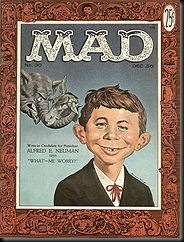
Former President Bush? He threw out the first ball at Japan’s recent baseball championship game, he’s popular with former Prime Minister Koizumi, and without trying he does a pretty darn good imitation of Mad Magazine’s mascot, Alfred E. (“What, me worry?”) Neuman .
All for this post,
Toasty
Sapporo, Japan
Friday, August 28, 2009
Edward M. Kennedy, 1932-2009, Hero
In a time where politics is fraught with name-calling, paranoia and insult, Senator Kennedy was a man of graciousness and a passionate advocate for the causes and people he believed in. His accomplishments were legion:
-
The Voting Rights Act of 1965.
-
The Freedom of Information Act.
-
The Occupational Safety and Health Act.
-
The Americans with Disabilities Act.
-
The Edward M. Kennedy Serve America Act of 2009.
-
Fought a four-decade crusade for universal health coverage.
-
Helped Soviet dissidents.
-
Fought apartheid.
-
Was one of 23 senators to vote against the Iraq war.
-
Vastly expanded the network of neighborhood clinics.
-
Virtually invented the COBRA system for portable insurance.
-
Helped create the law that provide Medicare prescriptions.
-
Helped create the Family Leave law.
What kind of man was he? Admittedly, neither a man without faults nor a self-righteous man who called names. In the words of Vice President Joe Biden, who worked in the Senate with him for 46 years, Senator Kennedy “never was petty; never was small. It was never about him, it was always about you.” He reached out to others, had a heart for others. When Mr. Biden’s first wife was killed in a terrible auto accident that injured their two children, Senator Kennedy was on the phone with him immediately, offering support.
What did Rush Limbaugh say about him? No surprise. If Kennedy was the Lion of the Senate, "We were his prey." No surprise there. I have two questions for Mr. Limbaugh: Does this mean that you oppose all of those things that Kennedy fought for that have benefited so many of your fellow citizens? Or do you simply not care?
“Today we have lost a great spirit,” Vice President Biden said. And so we have.
In a recent post, political cartoonist and blogger David Horsey wrote the following: “Teddy Kennedy is gone and we may not see his like again. But a greater tragedy for the nation would be if the politics of mutual respect, wise compromise and willingness to find common ground died with him.” So it would, David, so it would.
“If by a liberal,”, Senator Kennedy wrote, “they mean someone who looks ahead and not behind; someone who welcomes new ideas without rigid reactions; someone who cares about the welfare of the people, their health, their housing, their schools, their jobs, their civil rights, their civil liberties; someone who believes we can break through the stalemate and suspicion that grips us; if that is what they mean by a liberal, I am proud to be a liberal.” —Edward M. Kennedy
And so am I.
All for this post,
Toasty

